
Desmoplastic
Small Round Cell
Tumor Charity
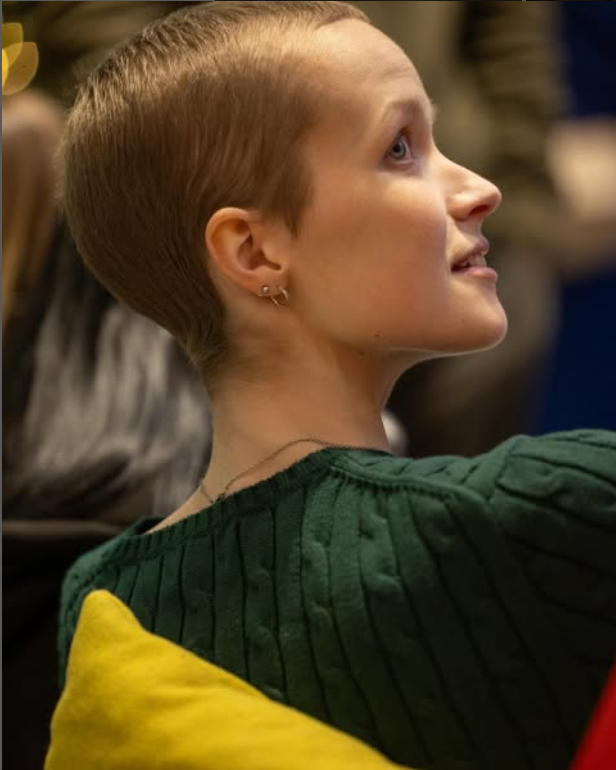

Liz was just 16 when she was diagnosed with Desmoplastic Small Round Cell Tumour. Having just started her A-Levels, she’d spent the autumn term looking around universities and planning her future. She dreamed of being a professional photographer and living in London. Until just before her diagnosis Liz had been the epitome of health, not missing a day of school since she’d had chicken pox aged seven.
Liz’s symptoms were subtle; a sore left shoulder, periods that had become gradually more painful and in the three weeks prior to her diagnosis feeling bloated. It was Christmas when Liz first mentioned not feeling quite right, she booked an appointment to see a physio in half term and put the bloating down to richer foods. Three weeks later, the bloating had become visible and the pain from her period didn’t end after the bleeding did. An emergency out of hours GP suggested an ovarian cyst was the likely cause, but when pain increased the day after she returned to A & E was given an MRI. The MRI found masses in her ovaries, omentum and liver. A diagnosis of cancer was given the following day and of DSRCT within four days. A week later she started VCD/IE chemotherapy at Leeds General Infirmary. She was their first case of Desmoplastic Small Round Cell Tumour.
In Liz’s case the NHS could not have moved more quickly. She had two cycles of VCD, but unfortunately due to the amount of ascites she had the IE component couldn’t be given. In round three her protocol was switched to VCDE. Round three also brought with it Para influenza, leaving Liz hospitalised and on oxygen support whilst she recovered. Post round three scans showed that her tumour mass had stayed broadly stable and her consultant asked her if she wanted to continue with chemotherapy given the limited effectiveness. Liz was firm that she did! Though terrified of chemotherapy to start with, by then she had lost her hair and had her port fitted. She was determined to continue.
Liz’s first consultant was medically sound, but Liz struggled to relate to her. After that appointment she changed consultants to Professor Bob Phillips; Liz loved him like family and always said speaking to him made her feel better. Bob never shied away from the truth – he gave Liz the facts she needed to live the life she had to the full and supported her in doing so. A virtual consult with Dr Emily Slotkin at Memorial Sloan in the US (who treats lots of DSRCT patients) confirmed that Liz’s condition was terminal but it also gave her the opportunity to ask questions about radiotherapy and surgery that were hard to get from the research.
Post round six scans showed a reduction in all of Liz’s tumours, her pain was vastly decreased and she was only taking 5mg of Oxycodone twice a day. For the first time her family allowed themselves to hope. Unfortunately however because of the impact on the heart, Liz had maxed out on Doxirubicin and despite the success of her current protocol a new one was needed. She had two cycles of VIA followed by two of CE. Neither were successful and her tumours continued to grow. Liz died on the 27/11/24 just ten months after her diagnosis aged only 17.
Ten months was too short but throughout that time Liz truly lived. She went on three separate Disney Cruises and a trip to Disneyland Paris where despite having only 12 weeks left to live she rode every ride across both parks. She took photographs at an investiture at Windsor Castle, on West End stages at both The Royal Ballet and Six The Musical, met Rob Brydon and photographed Michael Macintyre. She spent a day photographing Drag Race UK Drag Queens, and another at Charles Jeffrey’s London Fashion Week Catwalk Show. She photographed with Richard Heathcoate, Gareth Cattermole, David Suh and Rankin. Liz spent the last months of her life living not dying, on the last 10 weeks having stopped chemotherapy she was rarely at home. Instead she spent her time taking photographs and making memories with her family – especially her eight year old brother Mateo.
Liz’s memory lives on through her friends and family, but also through the incredible photographs she took and the lives she touched in doing so. But it also lives on in the research she contributed to in her lifetime, specifically around photobiomodulation treatment for mucusitis; as well as the research she made her family promise to fundraise for after her death.